
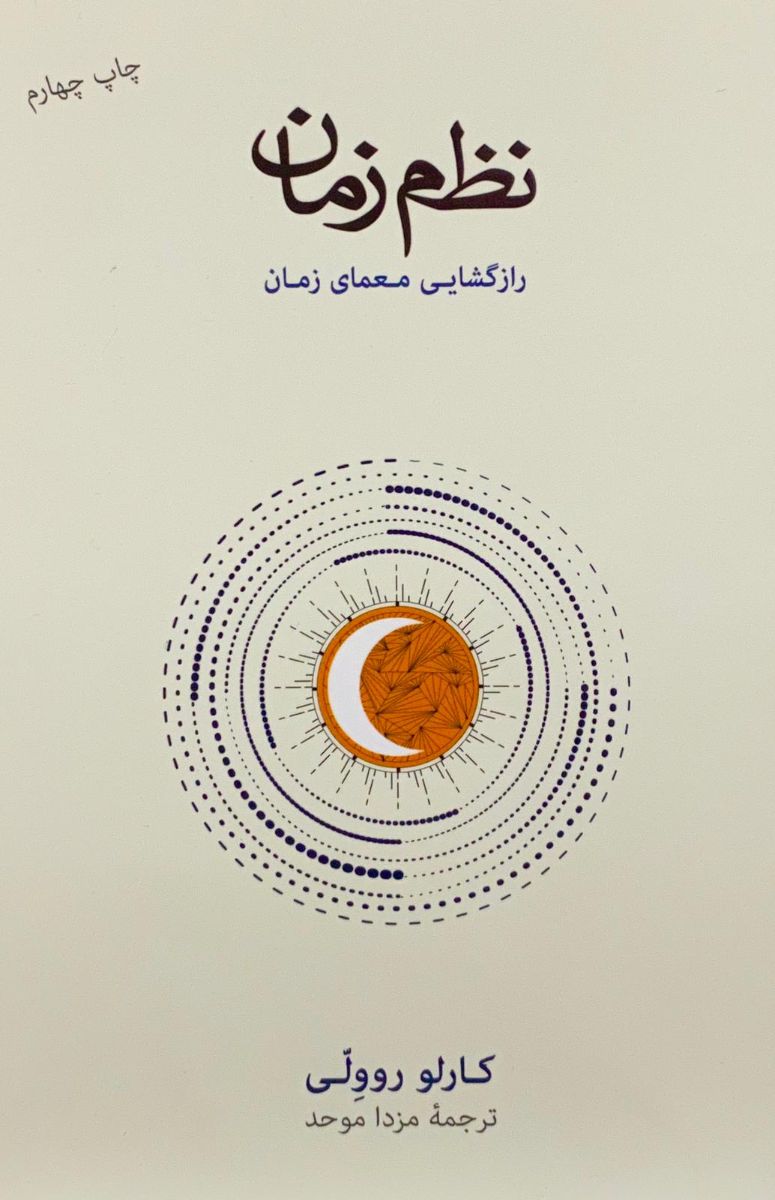
در اوقات فراغت آدم هوس میکند موضوعهای جدید علمی را یاد بگیرد و یکی از موضوعهای بسیار جالب فیزیک جدید است. مخصوصا که پس از خواندن کتاب «نظم زمان» انسان علاقهمند میشود بفهمد واقعا الآن چقدر میدانیم و چقدر نمیدانیم و این تعبیرهایی که در کتاب بوده دقیقا به چه چیزی اشاره میکند.
از مکانتیک کوانتومی شروع کردم. چون قبلا درس محاسبات کوانتومی را در دانشگاه گذرانده بودم، احتمال میدادم اینقدر هم سخت نباشد. دنبال منبع خوبی میگشتم که جزوههای درسهای آقای تانگ پیدا شدند. بسیار روان و شیوا بودند!
برای خواندن نظریه میدان، به نظر میرسید باید الکترومغناطیس را بلد باشیم. فصل اولش سخت نبود، اما برای فهم فصل دوم به نظر میرسید باید تسلطکی به حسابان برداری داشت. پس از مدتها وقفه، بالاخره حسابان برداری، تقریبا تمام شد.
حالا باید تصمیم بگیرم بعدش چه بخوانم. کوانتوم؟ ادامه؟ مکانیک آماری (که ربط عمیقی به زمان دارد)؟ یا حتی کمی بیشتر علوم کامپیوتر؟
درسهای آقای دکتر تانگ با لینک در ادامه آمدهاند.
?
An introduction to Newtonian Mechanics and Special Relativity, aimed at first year undergraduates.
?
A second course on classical mechanics, covering the Lagrangian and Hamiltonian approaches, together with a detailed discussion of rigid body motion.
?
A course for first year undergraduates, describing integral theorems and all things ∇.
?
A course on electromagnetism, starting from the Maxwell equations and describing their application to electrostatics, magnetostatics, induction, light and radiation. The course also covers the relativistic form of the equations and electromagnetism in materials.
?
A first course on quantum mechanics, focussing mostly on the Schrödinger equation.
?
An advanced course on quantum mechanics, aimed at final year undergraduates. It covers atomic physics, scattering theory, quantum foundations and a number of other topics.
?
An introductory course on solid state physics, aimed at final year undergraduates. It cover the basics of band theory, Fermi surfaces, phonons and particles in magnetic fields.
?
An introduction to the quantum Hall effect. The first half uses only quantum mechanics and is at a level suitable for undergraduates. The second half covers more advanced field theoretic techniques of Chern-Simons and conformal field theories.
?
An introduction to fluid mechanics, aimed at undergraduates. The course covers the basic flows arising from the Euler and Navier-Stokes equations, including discussions of waves, stability, and turbulence.
?
A graduate course on basic topics in non-equilibrium statistical mechanics. It covers kinetic theory and the Boltzmann equation, stochastic processs and linear response.
?
An introduction to statistical mechanics and thermodynamics, aimed at final year undergraduates. After developing the fundamentals of the subject, the course covers classical gases, quantum gases and phase transitions.
?
An introductory course on phase transitions and critical phenomena, aimed at first year graduate students. The main goal is to get to grips with the renormalisation group.
?
An introduction to general relativity, aimed at first year graduate students. It starts with a gentle introduction to geodesics in curved spacetime. The course then describes the basics of differential geometry before turning to more advanced topics in gravitation.
?
An introductory course on cosmology, aimed at final year undergraduates. It covers the expanding universe, thermal history, and structure formation.
?
An elementary course on elementary particles. This is, by some margin, the least mathematically sophisticated of all my lecture notes, requiring little more than high school mathematics. The lectures provide a pop-science, but detailed, account of particle physics and quantum field theory.
?
An introductory course on quantum field theory, aimed at first year graduate students. It covers the canonical quantization of scalar, Dirac and vector fields. Videos are also included.
?
These notes provide an introduction to the fun bits of quantum field theory, in particular those topics related to topology and strong coupling. They are aimed at beginning graduate students and assume a familiarity with the path integral.
?
A course for advanced graduates students, covering solitons in supersymmetric gauge theories and D-branes. It was given at the TASI summer school.
?
A basic course relating supersymmetric quantum mechanics to ideas in geometry, such as Morse theory and the Atiyah-Singer index theorem. It is aimed at first year graduate students.
?
An introduction to N=1 supersymmetry in d=3+1 dimensions, aimed at first year graduate students. The lectures describe how to construct supersymmetric actions before unpicking the details of their quantum dynamics and dualities.
?
An introduction to string theory, aimed at first year graduate students. It covers the bosonic string and the basics of conformal field theory.