
AI is the ability of machines or software to perform tasks that normally require human intelligence, such as reasoning, learning, decision making, and creativity. AI can help humans to do things better, faster, cheaper, and safer, by augmenting their capabilities and automating their tasks. AI can also enable new possibilities that were previously unimaginable, such as self-driving cars, virtual assistants, and smart homes.
However, AI also poses some challenges and risks for the workforce and the economy. AI can disrupt existing jobs and industries, creating winners and losers in the labor market. AI can also raise ethical, social, and legal issues, such as privacy, bias, accountability, and regulation. Therefore, it is important to understand the potential impact of AI on jobs development and prepare for the changes ahead.
AI is a fascinating and complex topic that has many applications and implications for our society. AI stands for artificial intelligence, which is the ability of machines or software to perform tasks that normally require human intelligence, such as understanding language, recognizing images, playing games, and making decisions.
There are different types of AI, depending on how they learn and what they can do. Some AI systems are designed to solve specific problems, such as driving a car, transcribing speech, or recommending products. These are called weak AI or narrow AI, because they only operate within a limited context and cannot generalize to other domains.
Other AI systems aim to achieve human-level intelligence across a wide range of tasks, such as reasoning, creativity, and common sense. These are called strong AI or artificial general intelligence (AGI), but they do not exist yet and are very hard to create.
AI works by using algorithms and data to learn patterns and make predictions. Algorithms are sets of rules or instructions that tell the AI how to process information and perform tasks. Data is the information that the AI uses to learn from and make decisions.
Depending on the type of AI, the data can be labeled or unlabeled, meaning that it has some explanation or not.
For example, labeled data for image recognition would have the names of the objects in the images, while unlabeled data would not.
There are different methods of learning for AI, such as:
Supervised learning is when the AI is given labeled data and a desired output, and it learns by comparing its predictions with the correct answers. For example, an AI that learns to classify images of animals would be given images with labels like "cat", "dog", or "bird", and it would try to match them correctly.
Unsupervised learning is when the AI is given unlabeled data and it learns by finding patterns or structures in the data. For example, an AI that learns to cluster similar customers would be given data about their preferences, behavior, or demographics, and it would try to group them into categories.
Reinforcement learning is when the AI learns by interacting with an environment and receiving feedback based on its actions. For example, an AI that learns to play a video game would be given rewards or penalties based on its performance, and it would try to maximize its score.
AI has many benefits, challenges, and future possibilities for our world. Some of the benefits of AI are that it can improve efficiency, accuracy, productivity, and innovation in various domains, such as health care, education, entertainment, and business.
Some of the challenges of AI are that it can raise ethical, social, legal, and technical issues, such as privacy, bias, accountability, security, and human-AI interaction.
Some of the future possibilities of AI are that it can create new forms of art, entertainment, communication, and knowledge; but it can also pose risks of misuse, abuse, or harm if not regulated or controlled properly.
Here are some examples of AI applications that you might find interesting:
This is a type of AI that can create new content or data, such as images, text, music, or code, based on some input or guidance. For example, generative AI can be used to create realistic faces of people who do not exist, write catchy slogans or headlines, compose original songs or melodies, or generate code snippets from natural language descriptions.
Generative AI is one of the top 25 emerging technologies for 2023, according to Gartner.
This is a type of AI that can model and simulate complex systems or scenarios, such as weather, traffic, epidemics, or social behavior. For example, AI simulation can be used to predict the impact of climate change, optimize urban planning, test new policies or interventions, or study human psychology and sociology. AI simulation is also one of the top 25 emerging technologies for 2023, according to Gartner.
This is a type of AI that can infer causal relationships from data, rather than just correlations. For example, causal AI can be used to determine the effect of a treatment on a patient, the influence of a marketing campaign on sales, or the contribution of a factor to an outcome.
Causal AI can help us understand why things happen and how to intervene effectively.
This is a type of machine learning that can train models on distributed data sources without sharing or transferring the data. For example, federated machine learning can be used to improve the performance and privacy of mobile devices, such as smartphones or smartwatches, by learning from their local data and aggregating the updates in a secure way.
Federated machine learning can enable collaborative and personalized learning across networks and devices.
These are realistic and interactive representations of humans that can be created using AI and computer graphics. For example, digital humans can be used to create virtual assistants, celebrities, teachers, or friends that can communicate and interact with us through voice, text, or gestures. Digital humans can provide us with new forms of entertainment, education, and socialization.
These are just some examples of current or emerging AI applications that are shaping our world.
AI can help humans to do things in various domains and sectors by using data and algorithms to perform tasks that normally require human intelligence, such as understanding language, recognizing images, playing games, and making decisions.
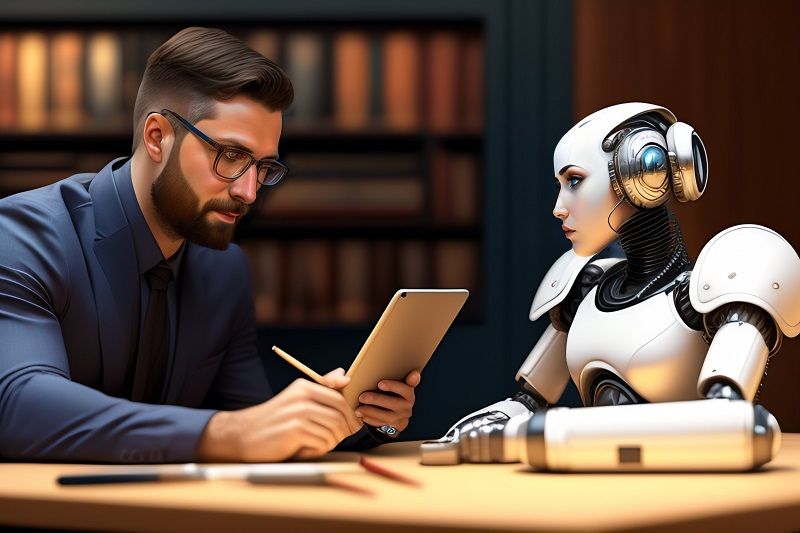
AI can also create new content or data, such as images, text, music, or code, based on some input or guidance. Some examples of how AI can help humanity are:
AI is a broad term that encompasses many applications and technologies that can enhance human capabilities, solve problems, and improve lives. Here are some data and statistics that show the positive impact of AI on humanity:
1. According to a survey by Ipsos for the World Economic Forum, nearly two-thirds of adults expect products and services using AI will profoundly change their daily lives in the next 3-5 years. The survey also found that 54% of respondents trust AI to do good for society, and 62% believe AI will have a positive impact on the environment.
2. A report by PwC estimated that AI could contribute up to $15.7 trillion to the global economy by 2030, increasing the global GDP by 14%. The report also suggested that AI could create new jobs, enhance productivity, and improve quality of life for millions of people.
3. A study by McKinsey analyzed the potential of AI to address 10 major challenges facing humanity, such as climate change, health, education, and security. The study found that AI could help reduce greenhouse gas emissions by 4%, improve health outcomes by 10%, increase access to education by 5%, and enhance security by 3%.
4. A research paper by Stanford University proposed a framework for measuring and improving the social impact of AI. The paper identified six dimensions of social impact: well-being, autonomy, justice, privacy, knowledge, and accountability. The paper also provided examples of how AI can benefit each dimension, such as improving mental health, empowering marginalized groups, reducing bias, protecting personal data, advancing scientific discovery, and ensuring ethical behavior.
These are just some of the examples of how AI can help humanity in various domains and aspects. Of course, AI also poses some challenges and risks that need to be addressed carefully and responsibly. That is why it is important to have an open and informed dialogue about the opportunities and limitations of AI, and to collaborate with different stakeholders to ensure that AI is used for good.
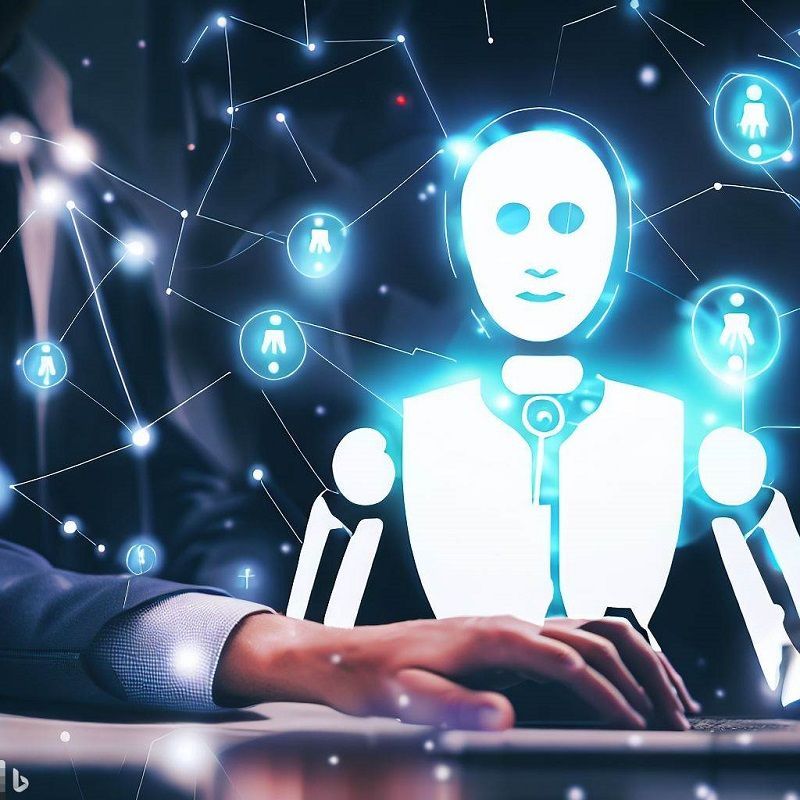
Artificial intelligence (AI) is a rapidly evolving technology that has the potential to affect jobs development in various ways, involved in:
AI can create new jobs by enabling new products, services, and markets, as well as enhancing existing ones. For example, AI can help design and develop new applications, platforms, and systems that require human skills and creativity. AI can also create demand for new roles such as data scientists, AI engineers, and AI ethicists.
AI can displace jobs by automating tasks that are repetitive, routine, or dangerous. For example, AI can perform data entry, assembly line manufacturing, and customer service more efficiently and accurately than humans. AI can also replace workers in some sectors such as oil and gas, real estate, and media.
AI can transform jobs by changing the nature and content of work. For example, AI can augment human capabilities and enable workers to focus on higher-value and higher-touch tasks that often require interpersonal interactions, problem-solving, and creativity.
AI can also enhance job quality by improving working conditions, productivity, and satisfaction.
However, the impact of AI on jobs development is not uniform or predictable. It depends on many factors such as:
Therefore, it is important to monitor and anticipate the changes that AI brings to the labor market, and to prepare for the opportunities and challenges that arise from them.
If you want to know about AI impact on jobs case studies, here are some examples from different sectors and countries:
AI can help improve the efficiency and quality of production processes, as well as enable new forms of customization and innovation. For example, a case study from the OECD examined how a German manufacturer of industrial valves used AI to optimize its production planning and scheduling, resulting in a 30% reduction in lead times, a 50% reduction in inventory levels, and a 10% increase in productivity.
The company also used AI to enhance its product design and development, enabling it to offer more than 100 million product variants to its customers. The impact of AI on the workers was mixed: some workers experienced job displacement or transformation, while others benefited from upskilling and reskilling opportunities.
AI can help automate and augment various tasks such as data analysis, risk management, fraud detection, and customer service. For example, a case study from PwCexplored how a UK-based bank used AI to improve its mortgage lending process, reducing the time required for mortgage approvals from 11 days to 5 minutes.
The bank also used AI to enhance its customer experience, providing personalized recommendations and insights based on customer data. The impact of AI on the workers was positive: the bank reported that no jobs were lost due to AI, and that workers were able to focus on more complex and rewarding tasks that required human judgment and empathy.
AI can help personalize and improve the quality of learning outcomes, as well as facilitate access and inclusion for learners from diverse backgrounds. For example, a case study from Emeralddescribed how an Australian university used AI to create an online learning platform that provided adaptive and interactive content, feedback, and assessment for students.
The platform also used AI to monitor student progress and performance, and to provide timely interventions and support. The impact of AI on the teachers was positive: the teachers reported that AI helped them save time and effort, and that they were able to use the data and insights from AI to enhance their teaching practices and strategies.
AI is a powerful technology that can bring many opportunities and challenges for the workforce and the economy. Here is a brief summary of some of the main points:
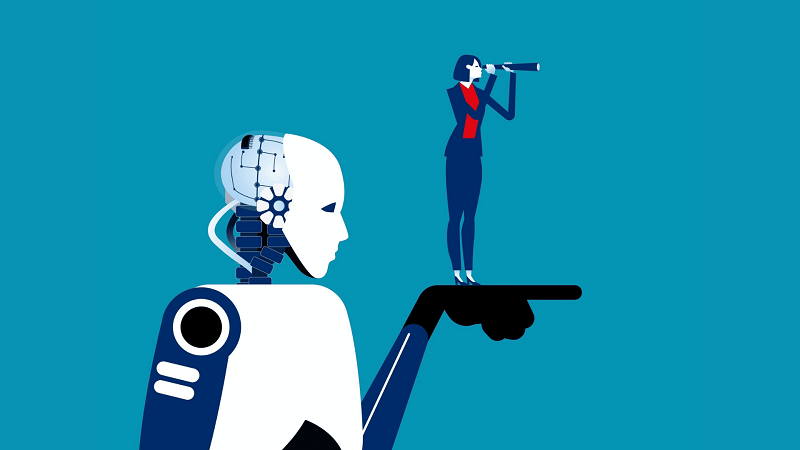
AI is a complex and evolving phenomenon that requires careful and collaborative governance by all stakeholders. The benefits and risks of AI should be balanced and shared equitably among all people.
AI is increasingly being used in the workforce to enhance productivity, efficiency, innovation, and customer satisfaction. Here are some examples of AI in the workforce:
Chatbots are computer programs that can interact with humans via text or voice, using natural language processing and understanding. Chatbots can provide customer service, answer queries, give recommendations, and automate tasks. For example, Domino’s Pizza uses a chatbot named Dom to take orders and track deliveries. Chatbots can also help employees with internal communication, training, feedback, and scheduling.
Augmented reality (AR) is the technology that overlays digital information or images onto the real world, creating an enhanced or interactive experience. AR can be used in the workforce for various purposes, such as training, collaboration, design, and visualization. For example, Boeing uses AR glasses to guide workers through complex assembly processes, reducing errors and increasing efficiency.
Smart buildings are buildings that use sensors, IoT devices, and AI to monitor and optimize various aspects of the building, such as energy consumption, temperature, lighting, security, and occupancy. Smart buildings can improve the comfort, safety, and sustainability of the workplace. For example, The Edge in Amsterdam is one of the smartest and greenest buildings in the world. It uses AI to adjust lighting and heating based on the preferences and movements of the workers.
Automated decision making (ADM) is the process of using algorithms or AI to make decisions without human intervention. ADM can be used in the workforce for simple or complex tasks, such as hiring, performance evaluation, promotion, firing, and resource allocation. For example, Uber assigns driving jobs to its drivers automatically by computer. ADM can also help reduce human bias and errors in decision making.
AI, or artificial intelligence, is the ability of machines or software to perform tasks that normally require human intelligence, such as reasoning, learning, decision making, and problem solving. AI offers many benefits for businesses, such as improving productivity, efficiency, innovation, and customer satisfaction. However, AI also poses some challenges and risks, such as ethical issues, privacy concerns, skills gaps, and job displacement. Therefore, it is important to leverage AI in a smart and responsible way.
Here are some recommendations or suggestions on how to leverage the benefits of AI:
These are some of the ways you can leverage the benefits of AI for your business. By using AI wisely and ethically, you can enhance your competitive advantage, customer loyalty, and social responsibility.
The risks of AI for jobs development are the potential negative impacts that artificial intelligence (AI) technologies may have on the employment and skills of workers. Some of the main risks are:
1. Job displacement: AI may replace human workers in some tasks or occupations, leading to unemployment, underemployment, or lower wages for some workers.
2. Skill mismatch: AI may create new tasks or occupations that require different skills than those of the current workforce, creating a gap between the demand and supply of skills.
3. Bias and discrimination: AI may introduce or amplify biases and discrimination in hiring, promotion, or performance evaluation, affecting the diversity and inclusion of workers.
4. Ethical dilemmas: AI may pose ethical challenges for workers, such as how to deal with moral conflicts, accountability, and responsibility in AI decision-making.
5. Security risks: AI may increase the vulnerability of workers to cyberattacks, data breaches, or identity theft, compromising their privacy and safety.