
به نام خدا
سلام
صوت آموزشی بعد از ظهر 5

درسنامه :
AUGUST 12, 2020/#PYTHON
Writer:Estefania Cassingena Navone
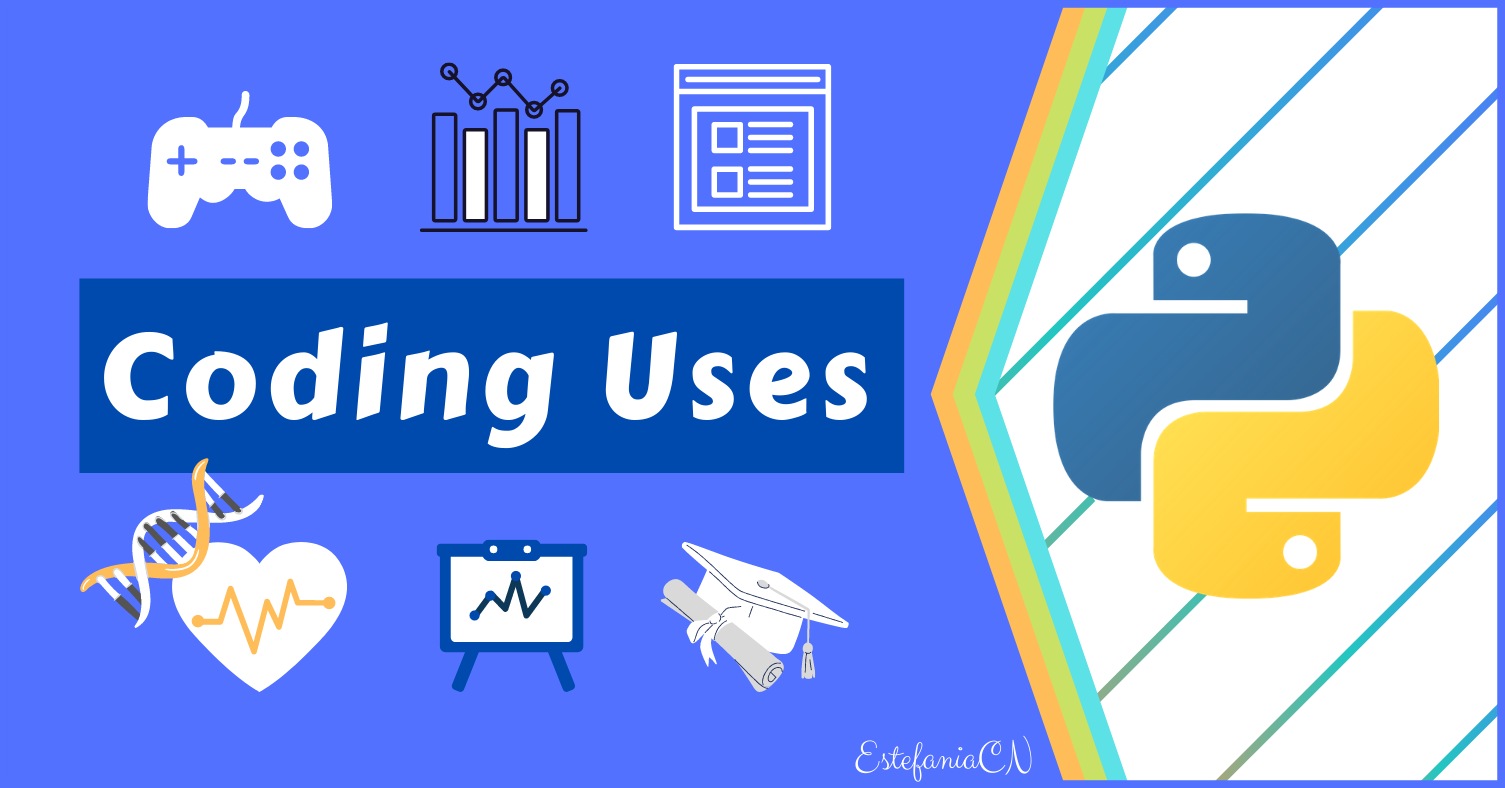
Hi! Please take a moment to think about this question:
How is Python applied in real-world scenarios?
If you are learning Python and you want to know the answer, then this article is for you.
Having a clear idea of the applications and vast potential of this programming language will give you the motivation that you will need throughout your journey.
Let's begin! ✨
Python is used in virtually every industry and scientific field that you can imagine, including:
This article covers a wide range of applications of this programming language in these industries with examples, use cases, and Python libraries. Let's start with the applications of Python in data science.
Python is used in the field of web development to build the back-end of web applications. Let's start this section by talking a little bit about what the back-end is and how it helps us to create web applications.
In a web application, all the code used to interact with the user and create what the user sees is called the front-end part of the application.
Python is used to code the behind-the-scenes functionality of the application, the part that powers all the functionality of the application but that you don't see directly on screen.
It handles the server-side of the application, interacting with all the necessary databases when the user requests data. It returns the requested data to the user to make the application run as expected.
? Tip: Full-Stack Web Development involves both the front-end and back-end of a web application to make it presentable to the user while working with databases.
These are some popular Python web frameworks:
freeCodeCamp's YouTube channel has great free tutorials to learn web development in Python:
These are also great free resources to learn how to work with these frameworks:
Python currently plays a key role in computer science education around the world. Let's see why.
Python is so widely used as a teaching tool because:
The creator of the Python language, Guido van Rossum, stated that:
Now, it's my belief that Python is a lot easier than to teach to students programming and teach them C or C++ or Java at the same time because all the details of the languages are so much harder.
Python's syntax is simple and straightforward, so students can start learning computational thinking and problem-solving skills much more quickly, which is usually the main goal of introductory computer science courses.
Many universities and schools around the world have decided to teach introductory programming and computer science courses using Python.
For example, MIT, one of the world's leading universities in the field of technology, teaches introductory computer science and programming using Python (both in the on-campus and online versions of the course on edX).
According to an article by MIT News published when the online version of the course reached 1.2 million enrollments, the course "has become the most popular MOOC in MIT history".
This clearly shows that Python's popularity continues to rise. In the article you can find testimonies of students who learned Python and how this new knowledge improved their lives.
In the article, Professor Ana Bell, lecturer in the EECS Department at MIT, states that:
“At its core, the 6.00 series teaches computational thinking...It does this using the Python programming language, but the course also teaches programming concepts that can be applied in any other programming language.”
This clearly shows the potential of Python as a teaching tool. It can be used to teach higher level concepts that can be applied to other programming languages.
And it does this without the extra layer of complexity that the syntax of other programming languages like Java or C might add to the learning process.
During the last few years, online courses have become an important part of the daily lives of learners of all ages worldwide. The variety of free online courses and resources has expanded tremendously in the last few years.
For example, freeCodeCamp's curriculum includes three free certificates with projects to help you expand your Python skills in key areas with high demand worldwide:
Harvard University also offers these online courses that can be audited for free:
Python has definitely become a key tool that has improved computer science education worldwide. And it will continue to do so in the future.
If you are thinking about teaching a course using Python or learning Python, I guarantee you that your time and effort will be totally worth it.
Python is used for computer vision and image processing, fields that are expanding rapidly.
The goal of image processing is to process an image, apply transformations to it, and return a new version of the original image.
In contrast, the goal of computer vision is more complex because it tries to make the computer understand and interpret an image and its content.
Let's start with image processing. With a Python library, you can perform operations such as:
Now let's dive into computer vision. If you start researching this topic, you might be surprised by its current applications. Some of them are:
This scientific field is so important that Google developed a tool called Cloud Vision, which has a Python version for developers to incorporate this functionality into their programs.
According to the "Using the Vision API with Python" tutorial in Google Codelabs, the Google Cloud Vision API:
Allows developers to easily integrate vision detection features within applications, including image labeling, face and landmark detection, optical character recognition (OCR), and tagging of explicit content.
This set of tools provides functionality for face detection, landmark detection, logo detection, label detection, text detection, and more.
? Tip: One of the most amazing applications of computer vision is the development of software to control self-driving cars. These vehicles need to "see" where they are driving, where the lane is, and what objects surround them (including other vehicles). Computer vision plays a key role in this functionality.
These are some awesome libraries for computer vision and image processing:
منبع درسنامه:
موفق باشید
به امید خدا