As a vegan, I believe in the power of compassion and the importance of treating all living beings with respect. That’s why the topic of animal testing strikes a chord with me.
First, it’s important to recognize that public opinion regarding animal testing has evolved.
Back in the day, it was generally accepted as a necessary evil for scientific and medical progress.
But nowadays, there’s a growing awareness and concern about the ethical implications of subjecting animals to testing.
When we consider the conditions under which animal testing is often conducted, it becomes clear why it sparks such strong emotions and prompts demand for change.
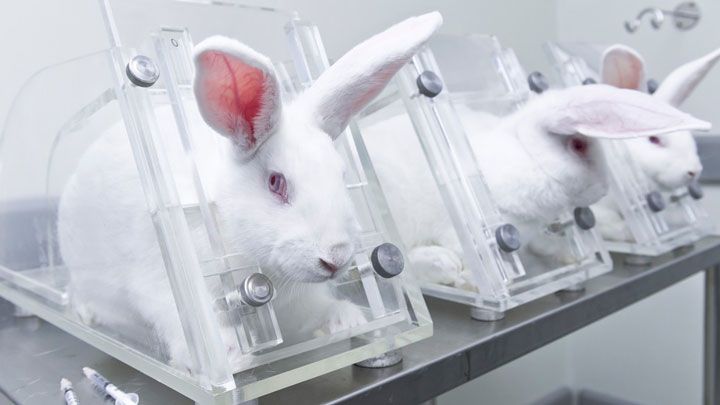
Many animals used in testing are confined to small cages, deprived of natural behaviors, and subjected to potentially harmful procedures.
It’s heart-wrenching to think about innocent animals enduring pain and distress for the sake of our scientific advancements.
Plus, there’s always the question of whether the results obtained from animal testing can even be reliably applied to humans due to biological differences.
Change is happening. People are becoming more informed about alternative methods and technologies that can replace animal testing.
Innovative approaches like in vitro testing (using cells and tissues) and computer simulations are proving to be effective alternatives, reducing the need for animal experimentation.
Imagine a world where all animals are identical in every way. It would be quite a monotonous place, wouldn’t it?
Well, the same goes for the animal kingdom. Each species is unique, with distinct behaviors, physiological processes, and biological systems.
That’s why considering “species differences” becomes crucial when discussing animal testing.
Consider a scenario where a particular drug is tested for human consumption.
It is reasonable to use an animal species that is phylogenetically similar to humans, such as primates or mammals.
However, this choice only guarantees accurate results due to inherent species differences.
For instance, a drug that proves safe for monkeys may not have the same effect on humans.
The uniqueness of each species, including differences in metabolism, immune responses, and genetic makeup, can lead to varying outcomes.
Consequently, relying solely on animal testing to predict human responses can be misleading and potentially harmful.
When it comes to animal testing, it’s important to consider the immense suffering experienced by these innocent creatures.
Animals subjected to tests endure confinement, fear, pain, and distress.
Evaluating the reliability and applicability of animal testing results to humans is essential. While animals share some biological similarities with us, they also have distinct differences.
Consequently, findings from animal studies may only sometimes translate accurately to humans.
Animal testing challenges this moral stance by treating animals as mere resources for human benefit.
Our actions should be guided by empathy, compassion, and a deep respect for the intrinsic value of all life.
Adopting alternative research methods that align with these principles will be crucial in shaping a more ethical and compassionate future.
What’s the deal with invasive procedures in animal testing?
Alright, picture this: scientists doing experiments that involve getting all up in an animal’s business.
We’re talking surgeries, poking, prodding, and all that jazz. They do it to study how different substances, treatments, or diseases affect animals.
Then, they try to relate the findings to us humans. Sounds intense. But hold on; we must dig deeper and discuss these critters’ conditions.
Animals in invasive procedures go through a lot of stress and discomfort because, let’s face it, labs aren’t their happy place. It messes with their heads and bodies, poor things.
They can’t stretch their legs, do animal things, or roam freely. It’s like putting a pop star in a tiny dressing room – cramped and frustrating!
It’s a sad truth, but the stress, trauma, and experimental conditions affect their health, so they can’t live their full lives as they should.
Animal breeding for experiments often serves the purpose of producing specific genetic traits or strains for scientific research.
These animals are bred with certain characteristics to mimic human diseases or conditions, aiming to find potential cures or treatments.
While the intentions may be noble, it’s essential to consider the conditions in which these animals are bred.
Most animals bred for experiments are raised in confined spaces, such as laboratories or specially designed facilities.
They spend their entire lives in cages or enclosures, devoid of the freedom to roam, explore, or express their natural behaviors.
For example, mice bred for experiments are typically housed in small cages with limited space to move around.
They are often subjected to stressful environments that harm their emotional and psychological well-being.
The lack of mental stimulation and social interaction can lead to depression, anxiety, and other forms of distress. These animals have feelings and emotions like our beloved pets at home.