
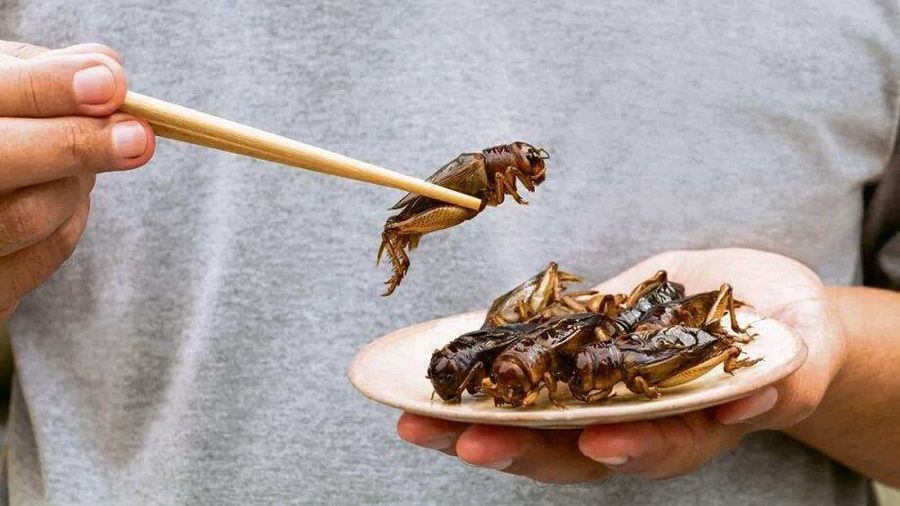
In many parts of the world, insects have been a major food source for centuries. Insects are considered a delicacy in places like Thailand, Mexico, and Africa. They are fried, seasoned, and served on a plate garnished with vegetables or pilaf.
I remember the first time I heard about people eating insects – I was like, “Eww, gross!” But the more I learned about it, the more fascinated I became.
People have been snacking on crunchy grasshoppers in Mexico, chewing on fried silkworm pupae in Korea, and savoring roasted ants in Africa for generations.
In fact, entomophagy (the practice of eating insects) is estimated to be a part of the traditional diets of at least 2 billion people worldwide.
For many, the idea of snacking on crickets or mealworms still seems out there.
However, with the rise of sustainable eating and a growing interest in alternative protein sources, insects are making their way onto more plates.
Lately, there’s been a lot of buzz around alternative protein sources, like insects. With the increasing demand for sustainable food options, people are exploring new ways of incorporating protein into their diets without relying on meat. There are conflicting opinions regarding the benefits and risks of incorporating insects into a vegetarian diet. One argument is that insects could be a sustainable protein option, reducing our reliance on resource-intensive livestock. They see it as an opportunity to address global food needs without harming the environment.
In a world where climate change is a significant concern, finding sustainable protein sources is more important than ever. Insects require far fewer resources to raise than traditional livestock and produce far fewer greenhouse gases.
Conversely, there are also ethical concerns surrounding the consumption of insects.
Vegans believe that insects are sentient beings capable of feeling pain and suffering and should not be exploited for food.
But, Some people argue that it’s impossible to know for sure whether insects are capable of experiencing pain and that their simplicity of nervous systems means they are less likely to suffer than more complex animals like cows or pigs.
Personally, I believe insects, too, have their place in the delicate balance of our ecosystem, and it’s important to treat all living beings with respect and compassion, whether they’re cows or crickets.
One of the main concerns with consuming insects is the risk of contamination. Insects can carry harmful bacteria and viruses, such as salmonella and E. coli, that can cause food poisoning and other health problems. Since insects are often collected from the wild or bred in uncontrolled environments, there is a higher risk of contamination than conventional livestock.
Additionally, there is a risk of allergic reactions to insect proteins. Some people may have a pre-existing allergy to certain types of insects, which can cause severe reactions. It’s important to note that insect allergies are not as widely studied as other food allergies. So, the risk is not well understood.
Another concern with consuming insects is the potential dangers associated with harvesting them. Some methods of insect collection, such as using pesticides or collecting from contaminated areas, can introduce harmful chemicals into the food chain. These chemicals can accumulate in the insects and risk human health.
Another ethical consideration is the impact that mass insect farming could have on the environment.
While insects are incredibly sustainable and require far fewer resources to raise than traditional livestock, it’s important to consider the potential negative consequences of large-scale insect farming.
From an environmental standpoint, insects might have a smaller carbon footprint than traditional livestock. However, let’s remember that plenty of plant-based protein options can meet our nutritional needs without compromising our vegetarian values. We can fuel our bodies and nourish our souls while staying true to our commitment to animal rights.
So, my fellow herbivores, let’s stick to our greens, beans, and tofu delights! By embracing a vegetarian diet, we’re positively impacting the world. We’re reducing animal suffering, minimizing our ecological footprint, and showing the world that compassion can be truly delicious.

