منبع: سایت علمی بیگ بنگ
What happens to the earth without the moon?
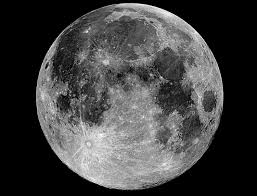
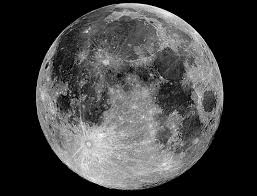
As you know, the moon revolves around the earth, and according to Newton's law, the two bodies of the earth and the moon affect each other's motion due to high masses. In this article, we want to look at how much the moon affects the earth.
The moon has always been one of the most important components in creating the right conditions for life to evolve on Earth, but recent scientific findings show that the Earth is not as dependent on the existence of the moon as previously thought.
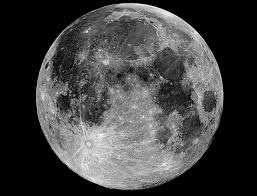
In 1993, French astronomer Jacques Laskar concluded with complex mathematical calculations that the gravitational pull of the moon is critical to keeping the Earth's axial deflection constant. The Earth's pivotal deviation plays a very important role in determining the climate pattern, and if it is constantly changing, it will cause a highly variable climate condition, the environmental consequences of which will disturb the peace of the Earth's inhabitants.
Laskar believes that we Earthlings are very lucky to have a moon so large in the sky above us. None of the rocky planets in the solar system have this gift. Mars, or the Red Planet, has two small moons known as Phobos and Dimos. These have actually been asteroids trapped in the orbit of Mars and, of course, have little effect on Mars. Hence, Mars' axial deflection has been changing steadily for millions of years, and sometimes its deflection axis even reaches a magnitude of at least 45 degrees. But this earthly good fortune in having a unique month was only the result of an event. 4.5 billion years ago, a massive planet or asteroid (roughly the size of Mars) hit Earth and formed from the crumbs from this terrible explosion, the moon. Based on the rare earth hypothesis, Peter Ward and Donald Brownley argued in a book of the same title that only on very few planets is everything possible for the evolution of life. Recent findings suggest that previous analyzes should be questioned.
Jack Lissuer of the Ames NASA Research Center, Jason Barnes of the University of Idaho and John Chambers of the Carnegie Endowment for International Peace showed what would happen to the Earth if it weren't for the moon. The researchers found that in the absence of the moon, only ten degrees would be added to the current deviation of the Earth's rotational axis, which is 23.5 degrees. Researchers say that if the earth were spinning faster, for example, it would take less than ten hours a day or vice versa to rotate, that is, the sun would rise from the west and set in the east, then the earth would fall. It was able to use the gravitational pull of other planets, especially Jupiter, and no longer needed the moon.
The earth revolves around itself every 24 hours. After the event that led to the formation of the moon, the earth revolved around itself every four or five hours. But its rotation speed gradually decreased due to the moon. The speed of the Earth's rotation before the formation of the moon is not yet known, but it is thought to have moved rapidly and sometimes even changed its direction of rotation. At the time of the Earth's formation, it was the collision of heavy objects that affected its direction of rotation.
Researchers believe that the direction of further rotation of rocky planets is from west to east, but others say that some rocky planets rotate in both directions, which means that the number of planets orbiting from east to west is not small. Researchers have concluded that life on rocky planets does not depend on the existence of the moon. In some cases, even a large moon can have catastrophic environmental consequences. Recent findings provide a new opportunity for biologists to think of new ways to search for extraterrestrial habitats.
Source: Big Bang Scientific Site
1399/2/30
2020/5/19
16:30