Author: Ali Masoumi, Master's Student in Accounting, Faculty of Financial Sciences, Kharazmi University
In the Name of the Lord of Martyrs and the Truthful
Introduction
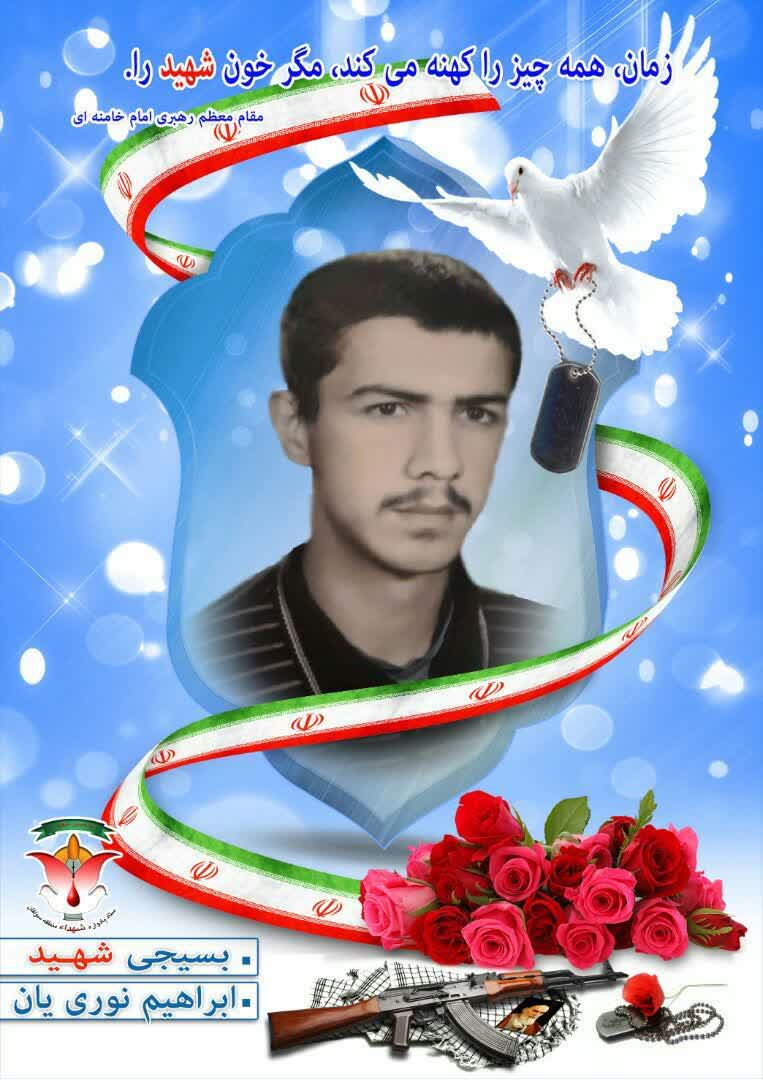
Martyr Ebrahim Noriyan Darandashi (the uncle of Ali Masoumi) was one of the noble sons of the Islamic Republic of Iran, who, through self-sacrifice and dedication, paved his path in the defense of the values of the Revolution and the protection of the homeland. His life and martyrdom, like those of many other martyrs, symbolize resistance, faith, and love for the country. Martyrs hold a special place in Iranian-Islamic culture and are always regarded as models of sacrifice, dedication, and responsibility. The biography and last will of Martyr Noriyan not only reflect his honorable life but also carry messages of faith, hope, and commitment to high human values.
The purpose of this article is to focus on the valuable life of Martyr Ebrahim Noriyan and provide an in-depth look at his will. The wills of martyrs, as documents of spiritual and ethical values, play a significant role in reinforcing the spirit of sacrifice and social responsibility. In this context, reviewing the life and testament of Martyr Noriyan helps us gain a deeper understanding of his ideals and beliefs, keeping his memory alive in our hearts.
Biography
Ebrahim Noriyan Darandashi, son of Mohammad Hossein, was born on April 4, 1967, in Marand County, East Azerbaijan Province. The Noriyan family was a respected and religious family in the region, always adhering to Islamic principles and values. Ebrahim grew up in an environment full of faith, love for the Ahl al-Bayt, and attention to religious teachings. His father, Mohammad Hossein, was a devout and hardworking man who emphasized ethics and honesty, playing the role of a kind and guiding father in raising his children. His mother, Marzieh, was a faithful and loving woman who prioritized raising pious and committed children in her life.
In this family, respect for ethics, humanitarianism, and religious duties were core principles instilled in Ebrahim from childhood. From a young age, he participated in religious gatherings and was committed to prayer and fasting. His family held deep respect for the ideals of the Islamic Revolution of Iran, and from the start, Ebrahim developed a revolutionary and militant spirit. The spiritual and religious atmosphere of their home transformed him into a person of high moral character, ready to serve society.
Ebrahim was known among his friends and peers as a kind, ethical, and helpful individual. He always assisted others and showed an interest in social and political matters from his teenage years. His family supported him in this path and emphasized patriotism and the defense of the oppressed. By following the teachings of the Quran and Nahj al-Balagha, they nurtured a sense of justice and courage in their children, to which Ebrahim responded with passion and love.
His parents worked wholeheartedly to raise responsible and pious children, and Ebrahim was the result of these efforts. At home, he learned respect for elders, honesty in behavior, and love for God and country. These family values made Ebrahim a committed, faithful, and capable young man ready to take on significant responsibilities. The Noriyan family, always loyal to Islamic principles, supported and encouraged him in his revolutionary and patriotic endeavors.
Ebrahim was not only responsible within his family but also in society, always ready to help others. His friends and classmates remember him as someone who constantly thought about assisting his fellow human beings, especially during the Islamic Revolution, when a special enthusiasm for serving the Revolution’s cause burned within him. His upbringing, based on faith, honesty, and love for the homeland, led him to walk the path of martyrdom and sacrifice from a young age.
Childhood and Education
Ebrahim Noriyan Darandashi spent his childhood in Marand, a historic and cultural city in East Azerbaijan Province. He grew up in an environment filled with love and spirituality. The town of Marand, with its people committed to religious and ethical values, played a significant role in shaping his character. From childhood, Ebrahim was known as a calm, kind, and hardworking child. He had a special interest in attending religious ceremonies and Quranic gatherings and showed a particular focus on religious teachings from a young age.
When Ebrahim was seven years old, his family moved to Tehran, where he began his elementary education. During his primary and secondary school years, he was always known as a responsible and disciplined student. Not only did he excel in his studies, but he also actively participated in religious gatherings. Alongside his education, he displayed a strong interest in religious and Quranic teachings. This combination of academic and religious education created a balanced and motivated personality in him, enabling growth in both intellectual and spiritual fields.
In the social environment of Tehran, Ebrahim was always recognized for his moral character and politeness. His friends and teachers spoke highly of his outstanding qualities, such as honesty, kindness, and a spirit of cooperation. He was always ready to assist his classmates and friends and held a special place in his school community. These traits gradually shaped him into a person who excelled not only in academics and ethics but also in social life.
Revolutionary and Military Activities
In his youth, Ebrahim Noriyan Darandashi joined the revolutionary youth at the peak of the Islamic Revolution of Iran and actively participated in public protests against the Pahlavi regime. His passion for realizing the ideals of the Islamic Revolution was evident from the start of the people’s movement. By attending mosques and revolutionary gatherings, he took the lead in promoting the ideas of Imam Khomeini and defending the oppressed and the underprivileged.
After the victory of the Islamic Revolution and the start of the imposed Iran-Iraq war, Ebrahim, still a young man, decided to fully dedicate himself to defending his homeland. He joined the Basij and the Islamic Revolutionary Guard Corps and, with a heart full of faith in God and love for his country, undertook military training with determination and hard work. While still in his third year of high school, he joined the Malek Ashtar Basij base and, after completing necessary military and medical training, was deployed as a medic to the front lines in October 1984. For three consecutive months, he fought the invading Iraqi Ba'athist forces.
In 1985, Ebrahim volunteered for deployment from the Malek Ashtar base to Andimeshk and later joined the Hamzeh Seyed al-Shohada battalion. After a month of gaining more military and medical experience, he was sent to the front lines, where he was injured in the successful Valfajr eight operation in the Faw region. He was transferred to a hospital in Isfahan for treatment. After a partial recovery, he rejoined the army of faith with renewed determination.
Martyrdom
Before his next deployment to the front, Ebrahim participated in the national university entrance exam. Shortly afterward, he was sent as a medic to the war zones. Less than fifteen days after his return to the battlefields, he was wounded in the victorious Karbala one operation in the Mehran region and was transferred to the rear. After undergoing surgery, he was moved to Imam Khomeini Hospital in Tehran, where he attained the great honor of martyrdom on July 20, 1986. He fulfilled his long-held wish to draw closer to God. By sacrificing his life, he inscribed his name among the noble and proud martyrs of the Islamic Republic of Iran, ascending to the pinnacle of honor and spirituality. His final resting place is in Behesht-e Zahra, Tehran, Section 53, Row 119, Plot 14.
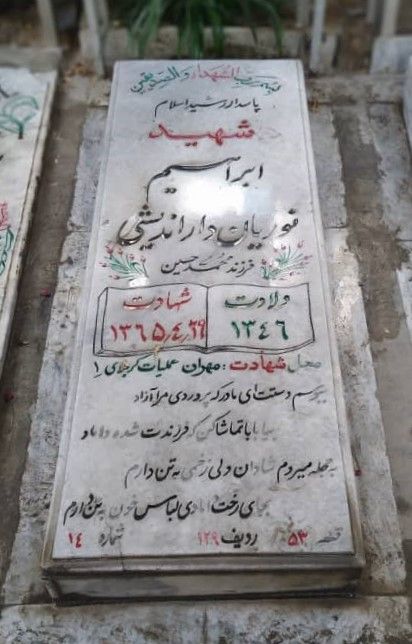
The Mehran region, which at the time was under intense pressure from enemy forces, witnessed the final moments of Ebrahim's life and his sacrifice in defense of Iran’s soil. His martyrdom in this operation, especially under circumstances where Iranian forces were facing numerous challenges and difficulties, stood as a clear symbol of selflessness and devotion to the homeland.
With Ebrahim Noriyan's martyrdom, both his family and the people of Iran found renewed determination to continue resisting and defending the ideals of the revolution. His memory will always remain alive in the hearts of the Iranian people, and the honors he achieved will not only inspire his family but also serve as a lesson for all future generations.
The Will of the Martyr
The will of Martyr Ebrahim Noriyan Darandashi, like the wills of other martyrs of the Islamic Revolution, reflects the depth of faith, commitment to Islamic and national ideals, and hope for a bright future for the country. This will not only provides a profound insight into the martyr's personal beliefs but also conveys valuable messages for his family, comrades, and society.
Martyr Ebrahim Noriyan's will, written in simple yet meaningful language, addresses themes such as faith, sacrifice, and the ideals of the revolution. In this will, he clearly expresses his deep love for God and his homeland, and introduces the path he has chosen as a means to attain divine satisfaction and defend Islamic values.
The text of Martyr Ebrahim Noriyan's will is as follows:
In the Name of God, the Most Gracious, the Most Merciful
In remembrance of God and His great name, I begin my will.
First, I bear witness that there is no deity but Allah in this world. He is the Creator of this orderly universe, and none can oppose Him. All good attributes exist perfectly in Him, and He has a purpose in creating this universe, which has not been made in vain. His purpose, as stated in the Holy Quran, is for humanity to attain perfection and happiness in this world and the hereafter.
In this regard, Almighty God has sent numerous prophets to clarify the path to salvation. After the completion of God's religion with the last Prophet, God made clear to us the manner of death, and He appointed noble Imams who, through various political and social challenges, each chose different ways to fight for God and ultimately offered their pure blood for the tree of Islam, ensuring the eternal life of the religion of the Messenger of God.
O people, my father and mother, sisters, and all my friends and acquaintances, I invite you to piety. I have gone, and shortly after, you will join me. We are all mortal, and only our deeds will remain until the Day of Judgment. On that day, we will be judged according to our actions. Let us remember God for the short time we have left in this fleeting life and act according to His word, for the path He has shown us is the way to happiness and prosperity in this world and the next. If we suffer harm in this life, it is due to our lower desires or the actions of those who follow their own lusts and serve Satan. All the calamities we see in the world today are caused by those who have no faith in God and reject the Quran and the words of the Prophet's family. If they adhered to divine laws, they could live in peace and harmony. Life passes swiftly, and before you know it, years and years will have gone by, and the flame of your life will dim. If you do not use your life wisely and draw nearer to God, you will face immense regret in the next world. If you wish not to be given your record of deeds in your left hand on the Day of Judgment and not to be humiliated before God and His saints, you must strive with your wealth and your life in the way of God and always follow the path of the Messenger of God and our noble Imams in your life.
Like Imam Hussein, you must sacrifice everything for God and in His way at the right moment. You have heard the story of Karbala more than I have. On the Day of Ashura, Imam Hussein gave up everything: his sons, his brothers, his nephews, and his best companions. He sacrificed all his wealth and his life for the sake of God and never complained to his Lord about the hardships he endured. Even in his final moments, he said, "O God, I am pleased with Your will." Imam Hussein, through his actions, revived God's religion, and in return, God will admit him into paradise, making him among the best of God's servants.
It is said that once a man came to the Prophet and said, "O Messenger of God, I greatly desire to have children, but God has not blessed me with any. Please pray that God may grant me this blessing." The Prophet prayed, but his prayer was not answered. The man left the Prophet's house in sadness and met Imam Hussein, who was still a young child. Imam Hussein asked, "Why are you sad?" The man replied, "I had a request, and though the Prophet prayed, it was not granted." Imam Hussein took the man's hand and brought him back to the Prophet, asking for permission to pray for him. It is said that Gabriel descended from the heavens and told the Prophet that God, in honor of Hussein's high status, had fulfilled the man's request. This is the exalted status of Hussein, achieved through his spiritual purification.
To my hardworking father and mother and my dear brothers and sisters, I ask that you forgive any wrongs I may have done. You have been very gracious to me and have many rights over me. It is I who have mistreated you and caused you pain, and I hope you will pardon me with your generosity so that my soul may be at peace.
Another piece of advice for my dear family is to maintain revolutionary patience and resilience in the face of hardships and sorrows. Lady Zainab, during the tragedy of Karbala, lost her sons, brothers, and nephews, but because it was for God's cause, she remained patient. Zainab's high status is due to her patience, resilience, and deep faith in God.
Another piece of advice is never to abandon our leader. He follows the Prophet, the noble Imams, and is the rightful deputy of the Imam of the Time. If you separate from him, you will stray from God's path. Do not neglect the Friday prayers, the beacon of unity for the Muslim community. The Prophet said, "Friday prayers are the pilgrimage of the poor." Do not forget to read the Quran. Read it, and if you cannot, at least read its meaning. It is said that if someone does not know how to read the Quran but simply opens it and sends blessings upon the Prophet, God will reward them as if they had read the Quran. Treat one another with good manners, for it will make your life joyful and fulfilling. Do not lie, slander, or gossip, and always behave with kindness and decency towards one another. Pray for your parents and friends, saying, "O God, as my parents showed me compassion and love in my childhood, show them mercy and forgive them on the Day of Judgment."
Do not forget me in your prayers. Ask God to forgive me and to shower me with His grace and mercy. Perform your good deeds sincerely for God's pleasure, and in your prayers, be present with humility before God. Participate earnestly in communal prayers and attend lectures to learn about your religious, moral, social, and political duties.
Martyrs hold a great rank before God, and their radiant faces will illuminate the plain of the Resurrection, where they will intercede for others.
Here, I conclude my brief will, and I wish you health and happiness in this world and the next.
Peace be upon the righteous servants of God.
11:20 AM, January 29, 1986
O God, protect Khomeini until the revolution of Mahdi.
See you on Judgment Day.
The Importance of the Martyr’s Will
In this will, the martyr advises his family to always remain committed to faith and piety and to continue on the path of truth and justice. He emphasizes the importance of maintaining unity and solidarity within the community and asks his family to continue his path with patience and perseverance. In his will, Martyr Noriyan also advises his comrades to persist in their defense of the nation and revolution, following in his footsteps.
The will of Martyr Ebrahim Noriyan had a profound impact on his family and society due to its deep spiritual and moral messages. It helped his family cope with his loss with greater strength and encouragement, enabling them to continue their lives. By reflecting on and studying the will, the family gained greater resilience and determination to uphold his values and continue on his path.
On a societal level, Martyr Noriyan's will become a model and source of inspiration for the youth and other faithful individuals. The messages in this will reinforce the emphasis on faith, sacrifice, and revolutionary spirit, calling on future generations to remember the martyr’s spiritual and human values.
There are several key and significant sections in Martyr Ebrahim Noriyan’s will that are especially noteworthy in spiritual and social contexts. Some of these sections include:
Martyr Noriyan’s will, with its rich spiritual and moral content, will forever remain in the hearts and minds of the people, serving as a guide for adhering to human and Islamic principles and values.
Impact and Commemoration
Martyr Ebrahim Noriyan Darandashi, as an honorable and selfless martyr, is deeply cherished both in society and by his family. His family, by preserving his memory and name, honors his values and continues his legacy through memorial ceremonies and cultural activities. In this regard, they hold anniversaries of his martyrdom, special religious ceremonies, and commemorative events for martyrs at both local and national levels. These activities not only pay respect to the martyr's status but also strengthen family and social bonds in the preservation of his memory and ideals.
The remembrance of Martyr Ebrahim Noriyan Darandashi is observed in various forms within the community. These ceremonies include:
Martyr Ebrahim Noriyan serves as a symbol of sacrifice, devotion, and commitment to Islamic values, playing a significant role in inspiring future generations. His memory and name, as a model of sacrifice in the path of the homeland and human values, motivate youth and future generations to pursue Islamic and social ideals. His teachings and will, especially for young people and students, stand as a source of inspiration and life lessons.
Many schools and universities, on various occasions, hold educational and research sessions on the life and sacrifices of Martyr Noriyan. Through these efforts, his teachings are passed on to new generations, ensuring that his memory not only lives on in the hearts of his family but also in the hearts of the people and future generations, becoming a source of inspiration and pride.
Conclusion
The life and martyrdom of Martyr Ebrahim Noriyan Darandashi symbolize sacrifice, devotion, and commitment to the ideals of the Islamic Revolution. With his distinguished character and revolutionary spirit, Noriyan, as one of the selfless warriors of the imposed war, not only exemplified Islamic and national values on the battlefield but also in his family and social life.
Martyr Noriyan’s life, filled with faith and dedication, stands as a prominent example in the history of the Islamic Revolution and Iran’s Sacred Defense. Through his active participation in the struggles of the revolution and defense of the homeland against enemy aggression, he became a valuable model of courage and sacrifice. His martyrdom during Operation Karbala-1 marked a turning point in the course of the Sacred Defense struggles, demonstrating how one can give their life for the sake of lofty human and national goals. This self-sacrifice remains a source of inspiration and pride not only in the hearts of his family and comrades but also among the people of Iran and future generations.
The central message of this article emphasizes the importance of Martyr Ebrahim Noriyan’s life and sacrifice as a symbol of devotion in the path of the revolution and homeland. The values he bestowed upon society include a deep faith in God, commitment to Islamic principles, and love for the nation. Through his life and martyrdom, he conveyed a message of courage, sacrifice, and loyalty to the ideals of the Islamic Revolution to future generations.
Martyr Noriyan reminded society that despite hardships and challenges, human and Islamic values must remain a priority, and efforts must be made to uphold them, even if it requires sacrifice. His life and will inspire future generations to follow human and Islamic principles and defend national and religious ideals.
By honoring the memory of Martyr Ebrahim Noriyan, society recalls how one can achieve lofty human and national goals through sacrifice and devotion, walking the path of truth and justice. These commemorations and values remind future generations that adhering to ethical and human principles will always lead to the realization of a better and more just society.